Baile charme AI
What Is the Baile Charme AI Trend? The Vovô, the Viaduct and the Dance Behind It
Baile charme AI is the TikTok trend that turns one photo into you dancing charme at a Rio night street party. Here is where the dance, the grandpa and the joke come from.
Published October 20, 2026
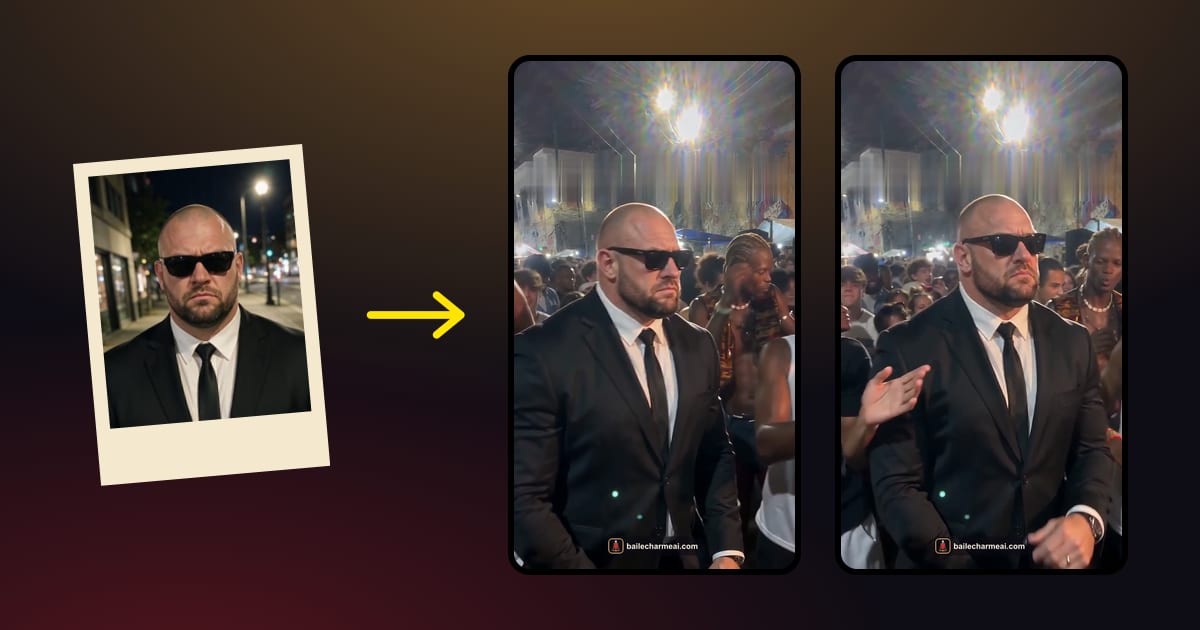
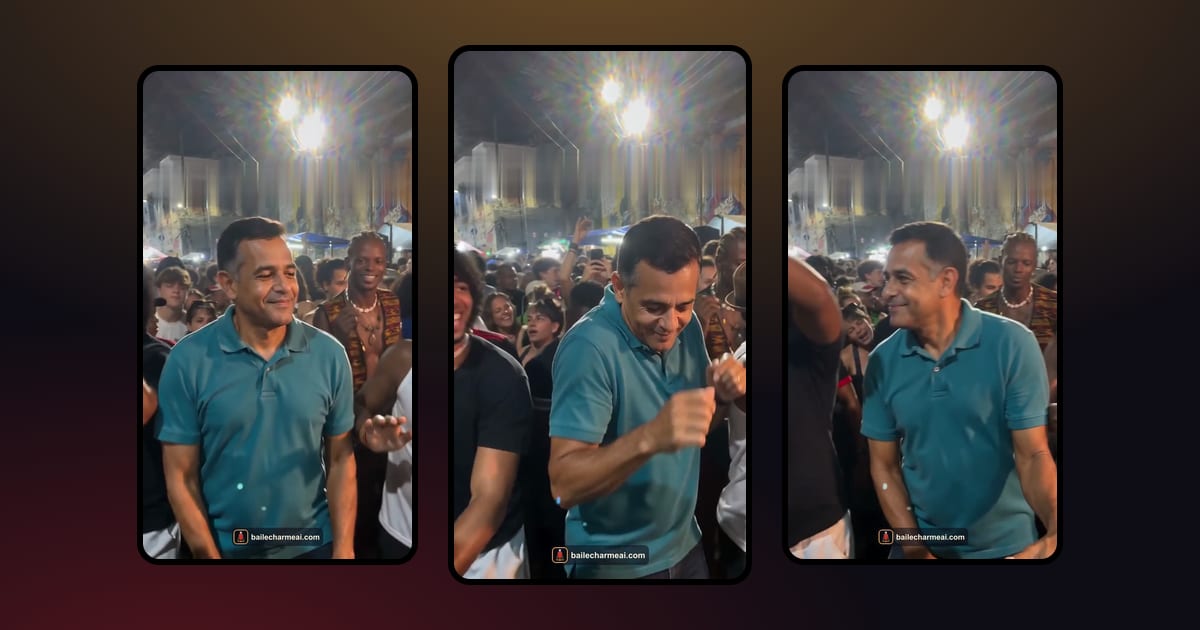
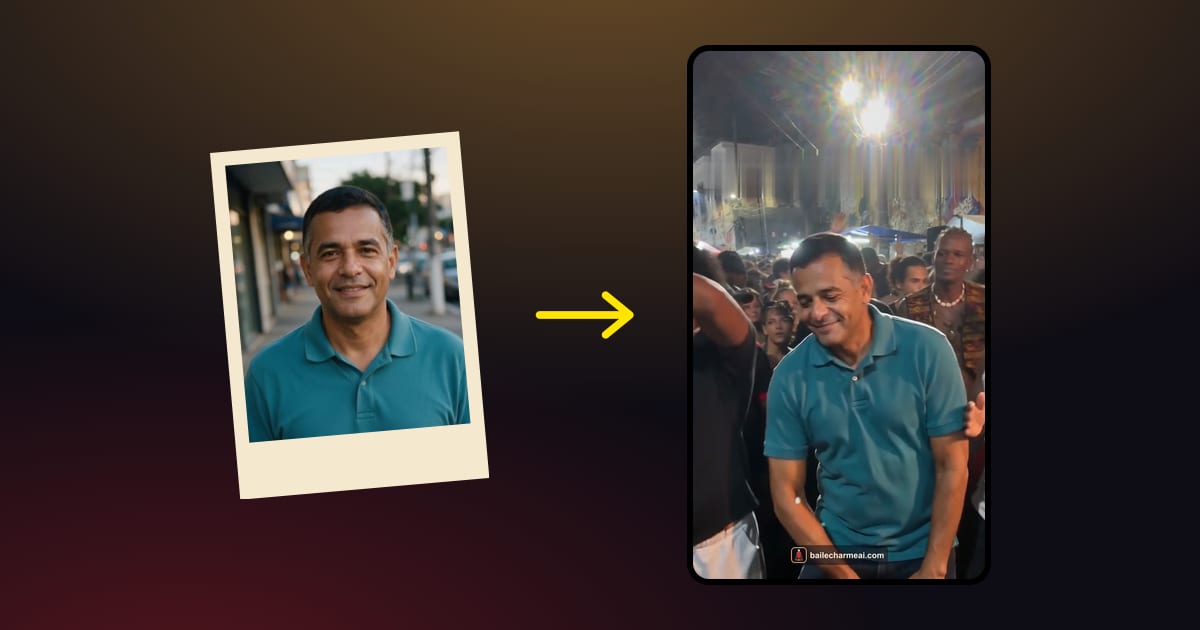
Baile charme AI is a TikTok trend in which an AI video puts someone in the middle of a Rio de Janeiro street party, dancing charme while the crowd cheers. It started with an AI clip of a white-haired grandpa out-dancing everyone, captioned "ninguém botou fé no vovô" (nobody believed in grandpa). Now people make their own version from a single photo of themselves, their parents or their friends, using a baile charme AI generator.
That is the short answer. The longer one is more interesting, because the joke only works if you know what a baile charme is, and the dance behind it has almost fifty years of history in Rio.
The baile charme AI trend in one paragraph
A baile charme AI video is a short vertical clip, usually 10 to 15 seconds, filmed as if on a phone at a night party in Rio. One person stands in the middle of the floor and dances charme: smooth side steps, relaxed shoulders, a turn on the beat. The people around them stop, watch, join in and cheer. Nothing in the clip is real footage. The dancer, the crowd and the street are generated by a video model, and the only real thing is the photo the dancer's face, hair and clothes come from. The appeal is the surprise: the person you would least expect is suddenly the best dancer at the baile.
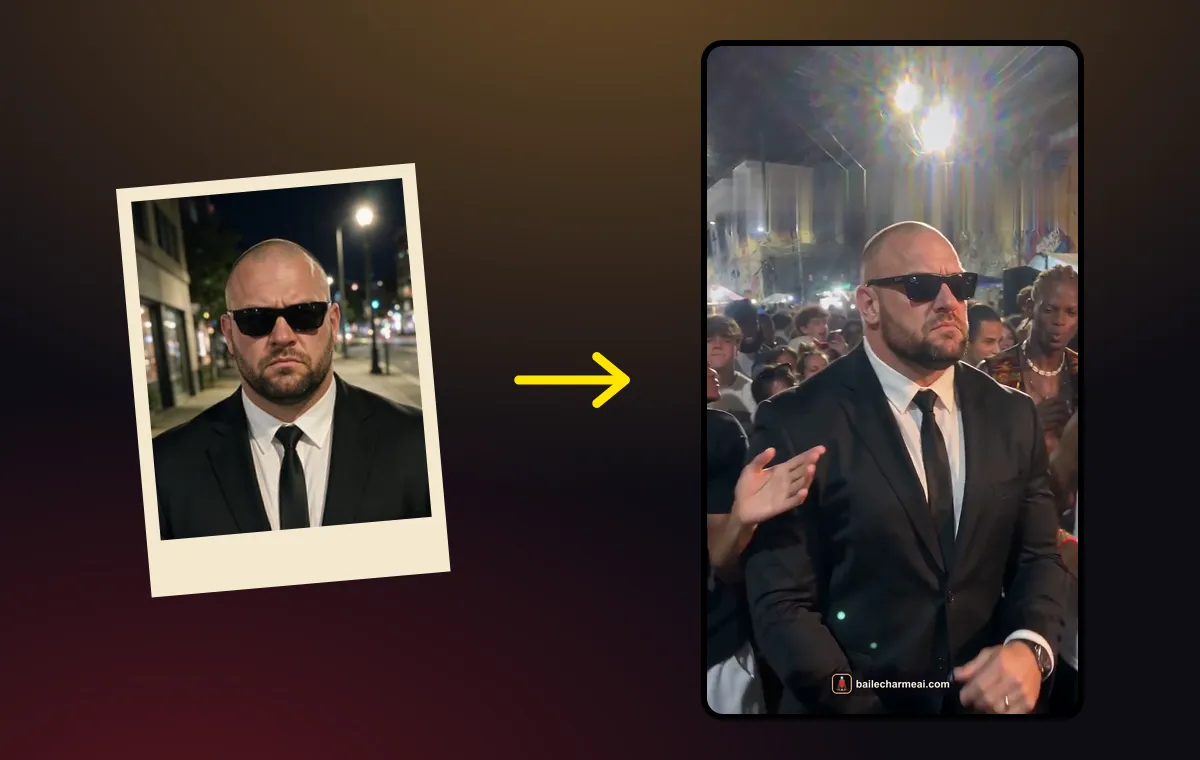
In Portuguese and Spanish the same trend is called baile charme IA ("IA" is the Portuguese and Spanish abbreviation for artificial intelligence). In English you will also see it described as "charme dance AI". All of these refer to the same kind of clip.
Where baile charme comes from: Black Rio, DJ Corello and the Madureira viaduct
Charme is a dance and a party culture from the suburbs of Rio de Janeiro. It grew out of the Black Rio soul parties of the 1970s, when clubs across the city's North Zone filled up with young Black cariocas dancing to American soul and funk records.
The name is usually credited to DJ Corello. In the early 1980s, when he slowed the music down for a set of smoother R&B, he announced it as the "hora do charminho", the charm hour: the moment for a more stylish, more controlled kind of dancing. The slow set became a genre of its own, and "baile charme" became the name of the party where it is played.
The most famous baile charme takes place under the Madureira viaduct, in Rio's North Zone. Since the early 1990s the street under the concrete overpass has turned into a dance floor on Saturday nights, with a DJ, a sound system and hundreds of people dancing the same steps together. Regulars dress up for it, and the dancing is precise rather than wild: everyone knows the sequences, and new ones spread across the floor in real time.
In 2019, Rio de Janeiro state declared the charme movement intangible cultural heritage. That matters for understanding the trend. Charme is not a meme invented for TikTok. It is a living tradition with its own music, its own etiquette and dancers who have been going every week for decades.
If you want to know what the dance itself looks like step by step, we break it down in Charme dance explained: the Rio step behind the trend.
How the trend jumped to TikTok in 2026
In 2026, charme clips filmed at Rio street parties, at places such as Pedra do Sal in the city's port area, started spreading across TikTok. They were real videos: people filming friends and strangers on the dance floor, usually in one handheld shot, with the crowd around them clapping and singing along.
Then, in October 2026, an AI-generated version took over. It showed an elderly man with white hair and a red shirt dancing in the middle of a night street party, the crowd going wild around him. The character, known as Seu Zé de Madureira, was created by a TikTok account; he is not a real dancer. The clip was funny, it was oddly moving, and it was very easy to copy.
Within days, people were making their own versions with the same idea: take one photo, put that person on the floor, let the crowd react. Tutorials appeared showing how to do it with a CapCut template, and web tools like ours appeared that do it from a photo directly in the browser. That is the point where "baile charme AI" became a search term.
"Ninguém botou fé no vovô": the joke that made it spread
The original AI video carried a caption in Portuguese: "ninguém botou fé no vovô". "Botar fé" means to believe in someone or to bet on them, so the line translates as "nobody believed in grandpa", or "nobody gave grandpa a chance".
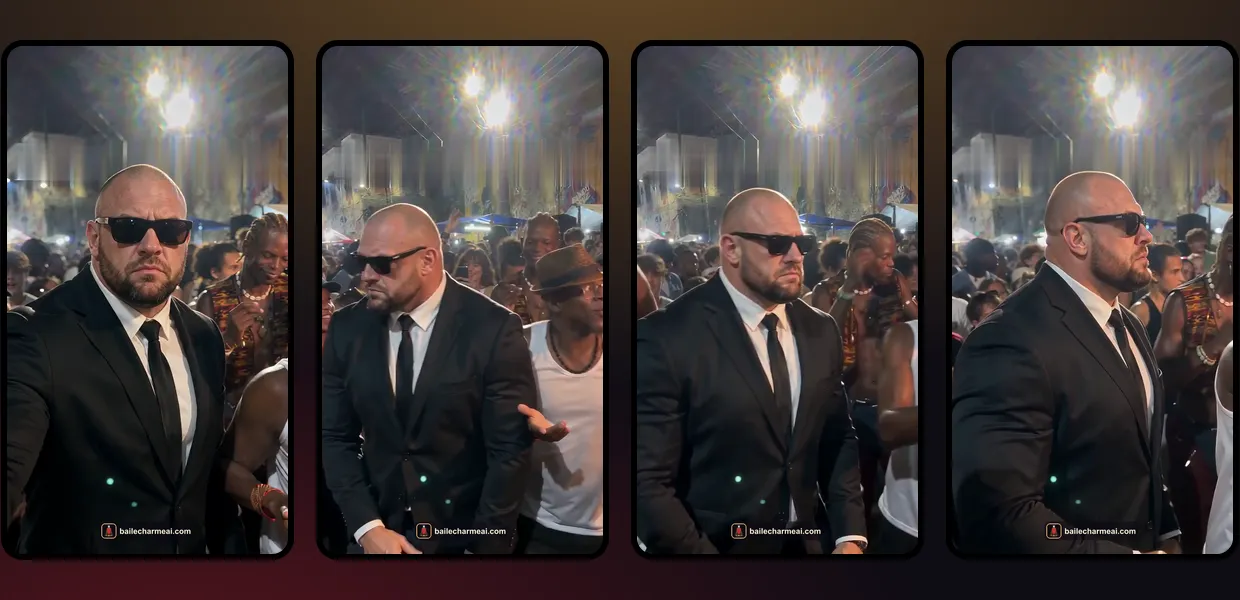
That one sentence is the whole format. You start with someone nobody expects anything from on a dance floor: a grandparent, a strict dad, your boss, the friend who always stays by the bar. Then the beat drops and they turn out to be the best dancer in Rio. The joke works in any language because everyone has a person like that in their life, and it works on video because the crowd's reaction tells the viewer how to feel.
It also explains why the trend is mostly made for other people. The most shared baile charme AI clips are not selfies. They are made for a family group chat, a birthday or a Mother's Day message, with a caption that names the person who "nobody believed in". (If you make one of someone else, ask them first. More on that below.)
Is it funk? Charme vs baile funk
No. This is the most common mix-up, partly because the CapCut templates and some posts call the effect "Brazilian funk dance AI".
Funk carioca (baile funk) is a different genre: fast, heavy electronic beats, MC vocals and much more explosive dancing. It comes from the same suburbs and shares some history, since both grew out of the Black music parties of the 1970s and 80s, but the two went in opposite directions.
Charme stayed with American R&B and soul. The tempo is slower, the steps are smoother and the dancing is collective: groups of people do the same sequence in sync, and the style is about control and elegance rather than intensity. When you watch a baile charme AI clip, that is what you are seeing, even if the AI dancer is somebody's grandmother.
How to join the baile charme AI trend from one photo
You don't need to film anything, learn the steps or install an app. With the baile charme AI video generator the process takes three steps:
- Upload one photo of one person with the face clearly visible. Waist-up or full body works best, because the AI needs to see the shoulders and arms to make the dance look natural.
- Pick 10 or 15 seconds. A 10-second video uses 10 credits and a 15-second video uses 13. You pay once; there is no subscription.
- Download and post. In 3–5 minutes you get a vertical 9:16 MP4 with AI-generated sound and no watermark, ready for TikTok, Reels or Shorts.
The person keeps the face, hair and clothes from the photo, and the street party, the crowd and the camera movement are generated around them. Only your own photo, or one you have permission to use, works: celebrity and public-figure photos are not accepted.

For a full walkthrough, including which photos work and what to do if the result looks off, read how to make a baile charme AI video from one photo.
FAQ
Is baile charme AI real footage?
No. Everything in the video except the person's appearance is generated: the crowd, the street, the lights and the sound. The person in the photo did not dance at a real baile. When you post one, it is good practice to label it as AI-generated.
Is Seu Zé de Madureira a real person?
No. Seu Zé de Madureira is an AI character created by a TikTok account. Baile Charme AI does not offer that character or use his image: the dancer in your video is always the person in the photo you upload.
How much does it cost to make a baile charme AI video?
It isn't free and there is no free preview. A 10-second video uses 10 credits and a 15-second video 13. The Solo pack is $6.99 for 10 credits, and credits never expire. If a render fails, its credits go back to your balance automatically. You can see all the packs on the baile charme AI homepage before you start.
Keep reading
 Charme dance AICharme Dance Explained: The Rio Step Behind the Charme Dance AI TrendWhat is charme dance? The smooth, synchronized Rio step to R&B and soul: how the basic step works, why everyone dances it together, where to see it, and how it became charme dance AI.October 20, 2026 · →
 Baile charme AIHow to Make a Baile Charme AI Video From One Photo (Step by Step)A step-by-step guide to the baile charme AI trend: which photo to use, 10 or 15 seconds, how to post it on TikTok, Reels and Shorts, and what to do if the video looks off.October 20, 2026 · →